Upon rediscovering this letter (I’ve always photocopied my letters to others if I thought they were significant), I wondered which photograph I was referencing. I found it soon in the Dot file.
A few months ago, I painstakingly sifted through all the correspondence, photos, and memories saved from all the people I’ve loved, and organized them by person, each having its own labeled file folder. All of them hanging in a file cabinet: family, friends, acquaintances, girlfriends. All of them.
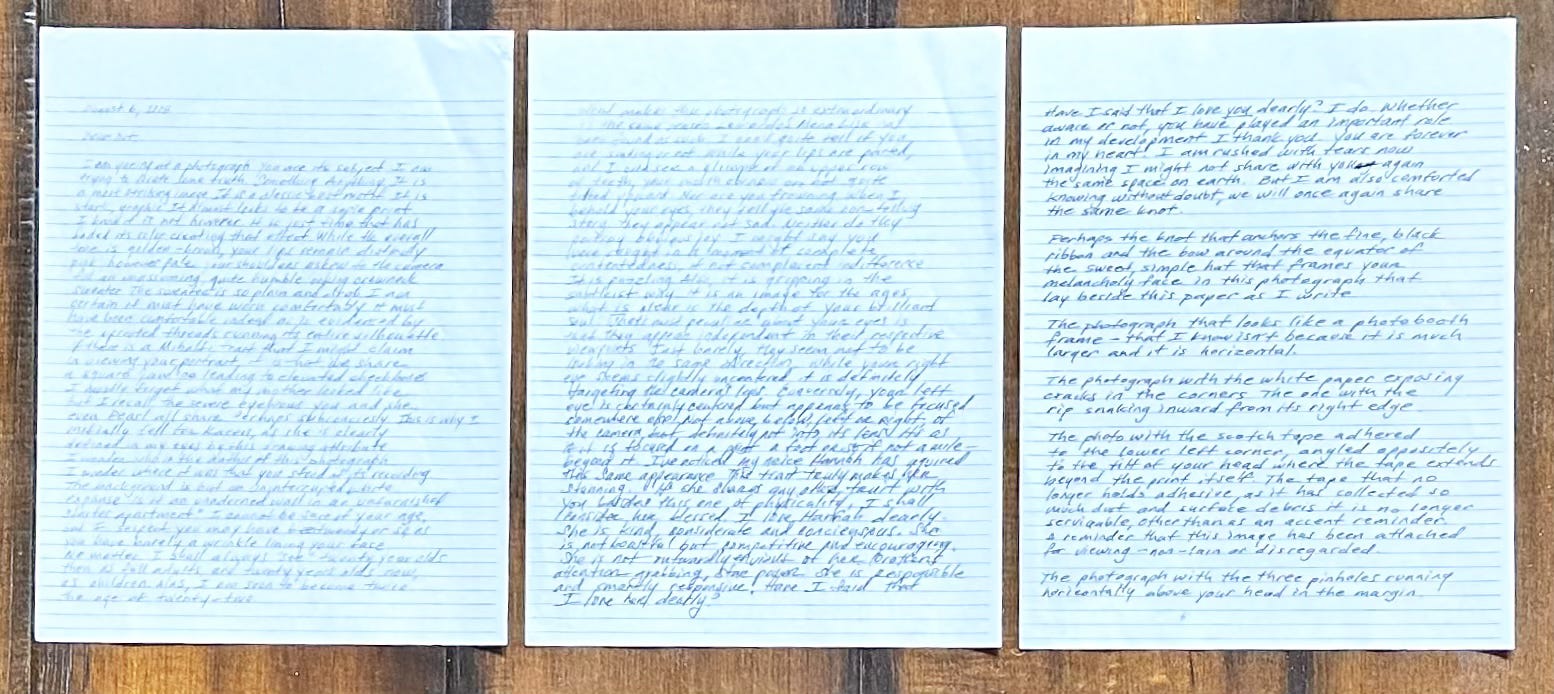
The handwritten letter:
August 6, 2008
Dear Dot,
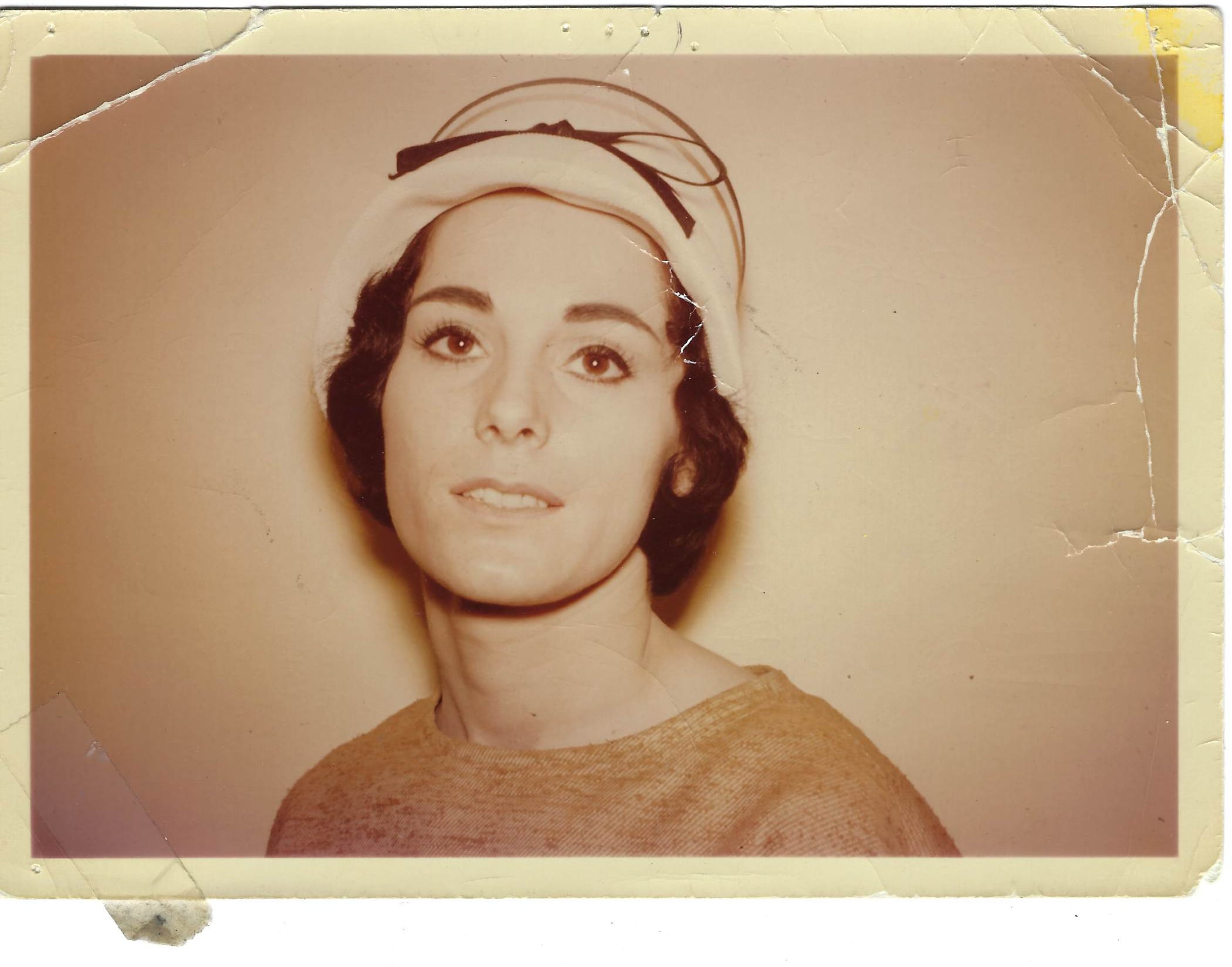
I am gazing at a photograph. You are its subject. I am trying to locate some truth. Something. Anything. It is a striking image. It is a classic bust motif. It is stark, graphic. It almost looks like a sepia print. I know it is not, however. Time has faded the color, creating that effect.
While the overall tone is golden brown, your lips remain distinctly pink—however pale. Your shoulders are askew to the camera, filling an unassuming, quite humble-looking crewneck sweater. The sweater is so plain and drab, it must have been comfortable and worn often as evidenced by the uprooted threads running its entire silhouette.
If there is a Mihalyfi1 trait that I might claim in viewing your portrait, it is that we share a square jawline leading to elevated cheekbones. I mostly forget what my mother looked like, but I recall the severe eyebrows you and she, even Pearl all share. Perhaps subconsciously, this is why I initially fell for Karen, as she is clearly defined—in my eyes—by this drawing attribute.
I wonder who is the author of this photograph. I wonder where it was that you stood at its recording. The background is but an uninterrupted white expanse. Is it an unadorned wall in an unfurnished starter apartment? I can’t be sure of your age, but I suspect you may have been 20 or so, as you have barely a wrinkle lining your face. No matter—I shall always “see” twenty-year-olds then as full adults, and twenty-year-olds now, as children. Alas, I am soon to become twice the age of twenty-two.
What makes this photograph so extraordinary is the same reason Leonardo’s Mona Lisa has been found as such. I can’t quite tell if you are smiling or not. While your lips are parted, and I can see a glimpse of an upper row of teeth, your mouth corners are not quite tilted upward. Nor are you frowning. When I behold your eyes, they tell the same non-telling story. They appear not sad. Neither do they portray obvious joy. I might say you were caught in a moment of complete contentedness, if not complacent indifference. It is puzzling. Also, it is gripping in the subtlest way. It is an image for the ages.
What is clear is the depth of your brilliant soul. What’s most peculiar about your eyes is that they appear independent in their respective viewpoints. Just barely, they seem not to be looking in the same direction. While your right eye seems slightly uncentered, it is definitely targeting the camera’s lens. Conversely, your left eye is certainly centered but appears to be focused somewhere else. Not above, below, left, or right of the camera, but definitely not into the lens. It’s as if it is focused on a point a foot or so—if not a mile—beyond it. I’ve noticed my niece Hannah has acquired this same appearance. This trait truly makes her stunning. If she shares any other trait with you besides this one of physicality, I shall consider her blessed.
I love Hannah dearly. She is kind, considerate, and conscientious. She is not boastful but competitive and encouraging. She is not outwardly envious of her brother’s attention-grabbing star power. She is responsible and smartly responsive. Have I said that I love her dearly?2
Have I said that I love you dearly? I do. Whether aware or not, you have played an important role in my development. I thank you. You are forever in my heart. I am rushed with tears now imagining I might not share with you again the same space on earth. But I am also comforted knowing without doubt, we will once again share the same knot.
Perhaps the knot that anchors the fine, black ribbon and the bow around the equator of the sweet, simple hat that frames your melancholy face in this photograph that lay beside this paper as I write.3
The photograph that looks like a photobooth frame that I know isn’t because it is much larger and it is horizontal.
The photograph with the white paper exposing cracks in the corners. The one with the rip snaking inward from its right edge.
The photo with the scotch tape adhered to the lower left corner, angled oppositely to the tilt of your head, where the tape extends beyond the print itself. The tape that no longer holds adhesive, as it has collected so much dust and surface debris that it is no longer serviceable, other than as an accent reminder. A reminder that this image has been attached for viewing—not lain or disregarded.
The photograph with the three pinholes running horizontally above your head in the margin.
The photograph that also—I just noticed—has two almost healed pinholes in its upper right corner. And one more in the upper left. The lower left a hole as well. It is possible, and probable there once existed a pinhole at the bottom right corner that has since become a notch.
This striking photograph that I am gazing at has been displayed numerous times in numerous places.
And this image has never been lost (completely) since the day it arrived from COLORFAX LABORATORIES, INC. 1160 Bonifant Street, Silver Springs, Maryland.
Eric
As I re-read this letter before mailing, I held the photograph toward me to examine it once again. I noticed in certain light at a certain angle that I must have carelessly written notes about this year’s container garden atop the photograph as I composed this letter, as there is evidence of those notes embedded as downward embossing across the gloss.
The words I can decipher are: Flower? Needs little soil and Silvery green dreadlocks.
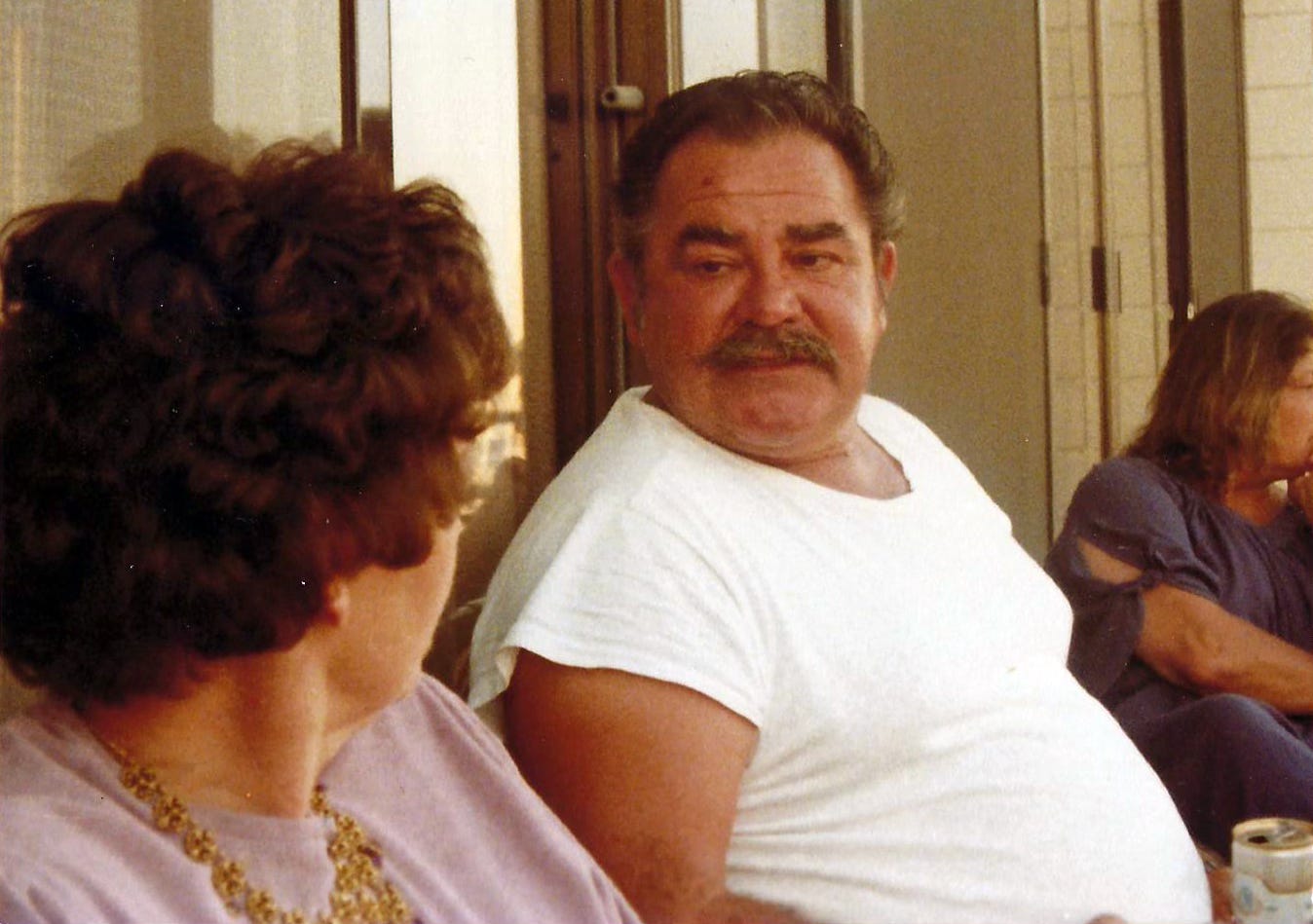
I am now recollecting the West Coast trip referenced in my previous post, Dear Aunt Dorothy. Before our drive to San Francisco, we spent time in the Los Angeles area. We stayed a couple of nights in Marina Del Rey. My uncle Ernie entertained us with endless stories on our hotel room’s balcony. The sole job for teenage me was to bring him 16-oz tall boy cans of beer, one after another. The only thing I recall him saying verbatim was when he was on the phone, spelling his name to whoever was on the other end.
“Mihalyfi— “M, I, H as in hell, A, L, Y, F as in fart, I.
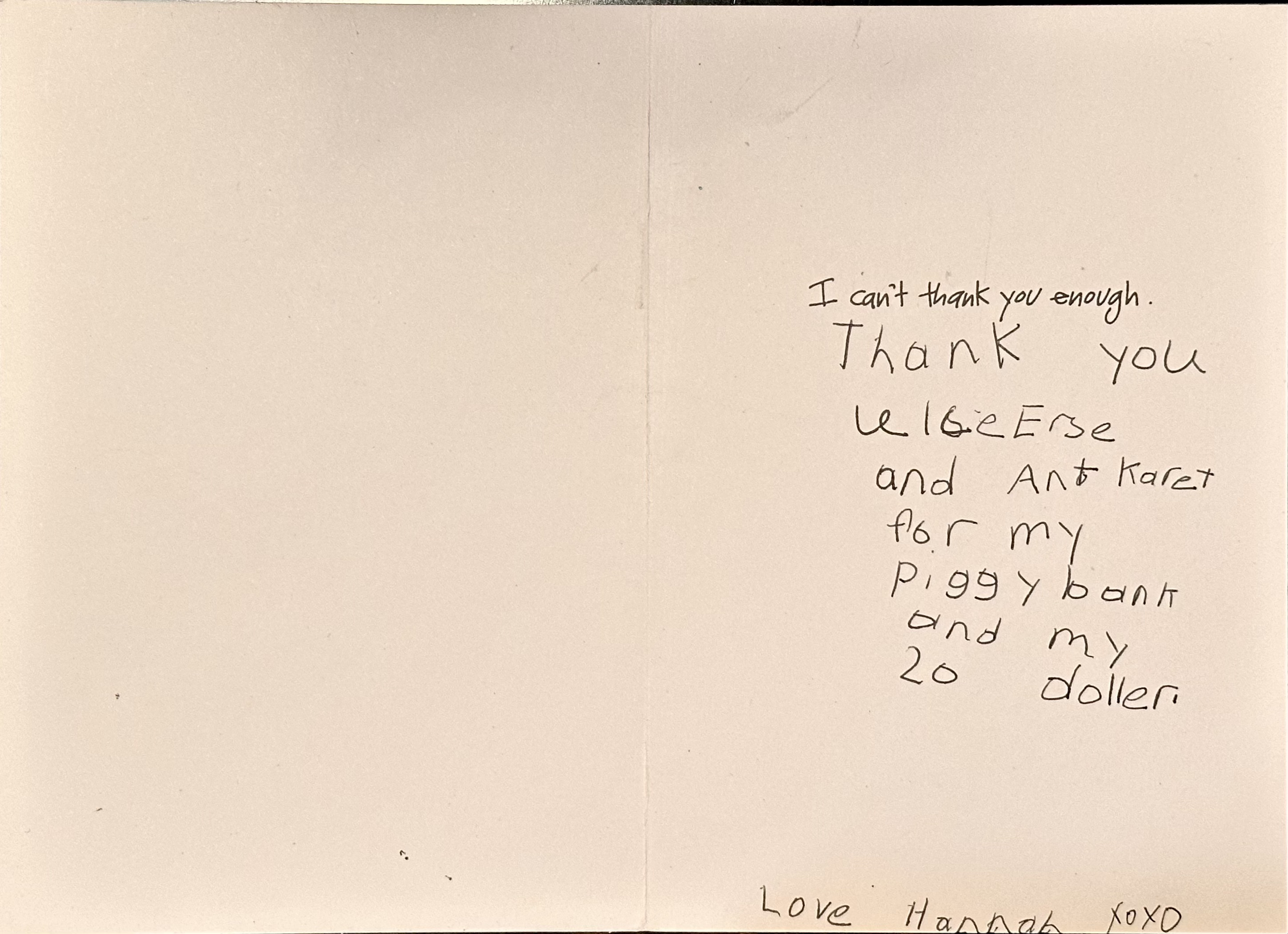
I’m not sure how old Hannah is here, but I’m happy someone taught her the importance of recognition through handwritten messages, envelopes, and stamps. Perhaps she, too, has saved and plans to share her history. I hope so. I also hope that Karen might, from this day forward, be willing, as a couple, be referred to as Ulce Erse and Ant Karet.